
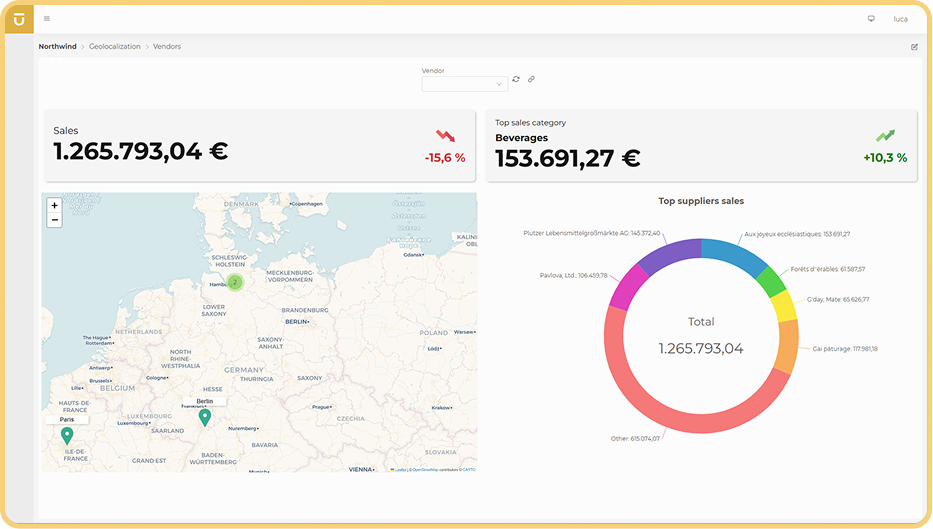
Traditional Business Intelligence has been a priority on the agenda of many organizations for years. But, in practice, the results are often disappointing: BI projects that drag on endlessly, dashboards that are barely consulted, and a persistent feeling that Business Intelligence doesn’t ultimately deliver real value to the business.
In classic BI models, the root of the problem is structural, where the absence of a solid model for data governance, traceability, auditing, and permissions management leaves business intelligence systems isolated from business processes.
This gap is replicated in companies of all sizes because, essentially, traditional BI does not address the challenges that the modern data environment demands be solved.
Data Governance: The Great Absence in Classical Business Intelligence
The main mistake is implementing business analytics as a simple final layer of visualization, disconnected from the corporate data ecosystem. Organizations work with multiple sources—operational databases, corporate applications, internal files, and external services—and trust that a BI tool will be able to “organize” all that chaos on its own.
Without a clear data governance strategy, definitions change, metrics don’t align, and information traceability becomes diluted. When this happens, Business Intelligence ceases to provide value, no matter how attractive the dashboards may be.
Traceability and Auditing: Knowing What Happens with the Data Corporate Data
This problem is compounded by another equally critical, though less visible, issue: the lack of data traceability and real auditing capabilities. In many organizations, it is difficult to answer seemingly basic questions: Who accesses the data? What information is being accessed? For what purpose?
The absence of this traceability hinders internal and external audits, generating discrepancies with security teams. Without a clear record of data usage, control becomes more of a theoretical exercise than an operational one.
Permission Management and RBAC as Weak Points of Traditional BI
As BI spreads throughout the organization, the problem is amplified by the management of permissions for data access. Management, analysts, operational teams, and external collaborators all need access to information, but not everyone should have the same level of detail.
Many traditional platforms address this challenge superficially, resorting to:
- Inflexible global restrictions
- Duplication of reports and dashboards
- Manual controls are difficult to maintain
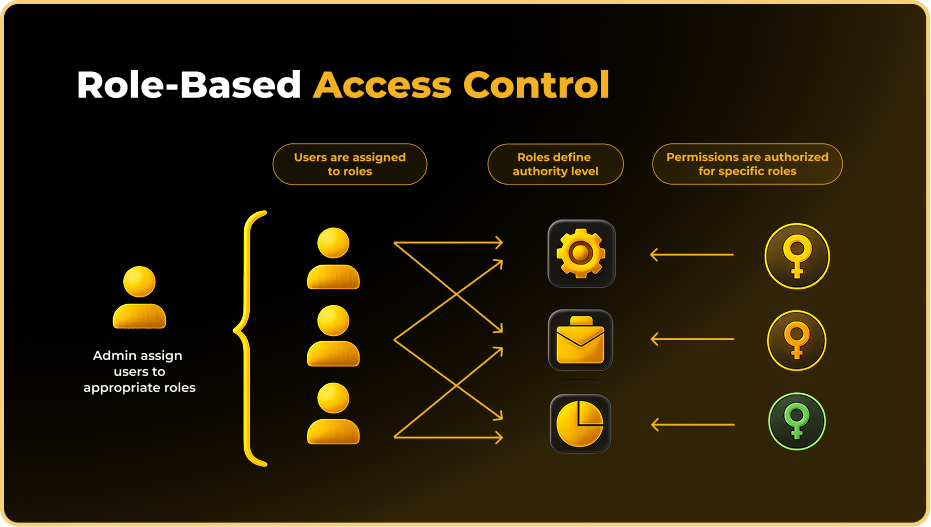
The absence of a Role-Based Access Control (RBAC) model https://www.cloudflare.com/es-es/learning/access-management/role-based-access-control-rbac/ generates complexity, errors, and security risks.
A modern BI system must allow granular permission management, based on roles, profiles, and contexts, aligned with data governance and corporate security policies.
Data centralization: when BI doesn’t fit real-world environments

Business Intelligence solutions based exclusively on external services or rigid architectures have limitations in on-premise and hybrid environments, where data traceability and technological sovereignty are critical.
When the data architecture doesn’t adapt to these requirements, BI ceases to facilitate decision-making. This gap between information protection and its operational use defines one of today’s main technological challenges.
According to expert opinion According to Marcos Cobo, Product Manager at LUCA BDS, “In today’s hybrid environments where data is massive, classic visualization models focused on simple retrospective data queries are no longer sufficient to meet corporate needs for compliance with audit requirements or data governance.”
From Traditional Business Intelligence to Governed Data Platforms
When all these factors are analyzed, the pattern is clear. Traditional Business Intelligence fails when:
- There is no robust data governance model
- There is no traceability or auditing of information usage
- Permission management is rigid or manual
The most effective modern data tools are those that embrace this complexity from the design stage. They are solutions capable of integrating multiple data sources and environments (cloud or on-premises), offering clear visualizations, while ensuring role-based access control, complete traceability, continuous auditing, and flexible deployments.
How to Overcome the Limitations of Traditional BI
In short, overcoming these barriers requires evolving towards data platforms that align data strategy with business objectives. This shift is already visible in the market, where the adoption of solutions focused on control, security, and compliance is growing.
In this context, solutions like LUCA BDS transform Business Intelligence into a strategic asset, integrating data governance, traceability, security and advanced analytical capabilities to turn business intelligence into a real pillar of data-driven executive decision-making.